Sometimes transformation starts in the supply closet
Big transformations take time. Sometimes people need to see that change is possible before the big change is finished.
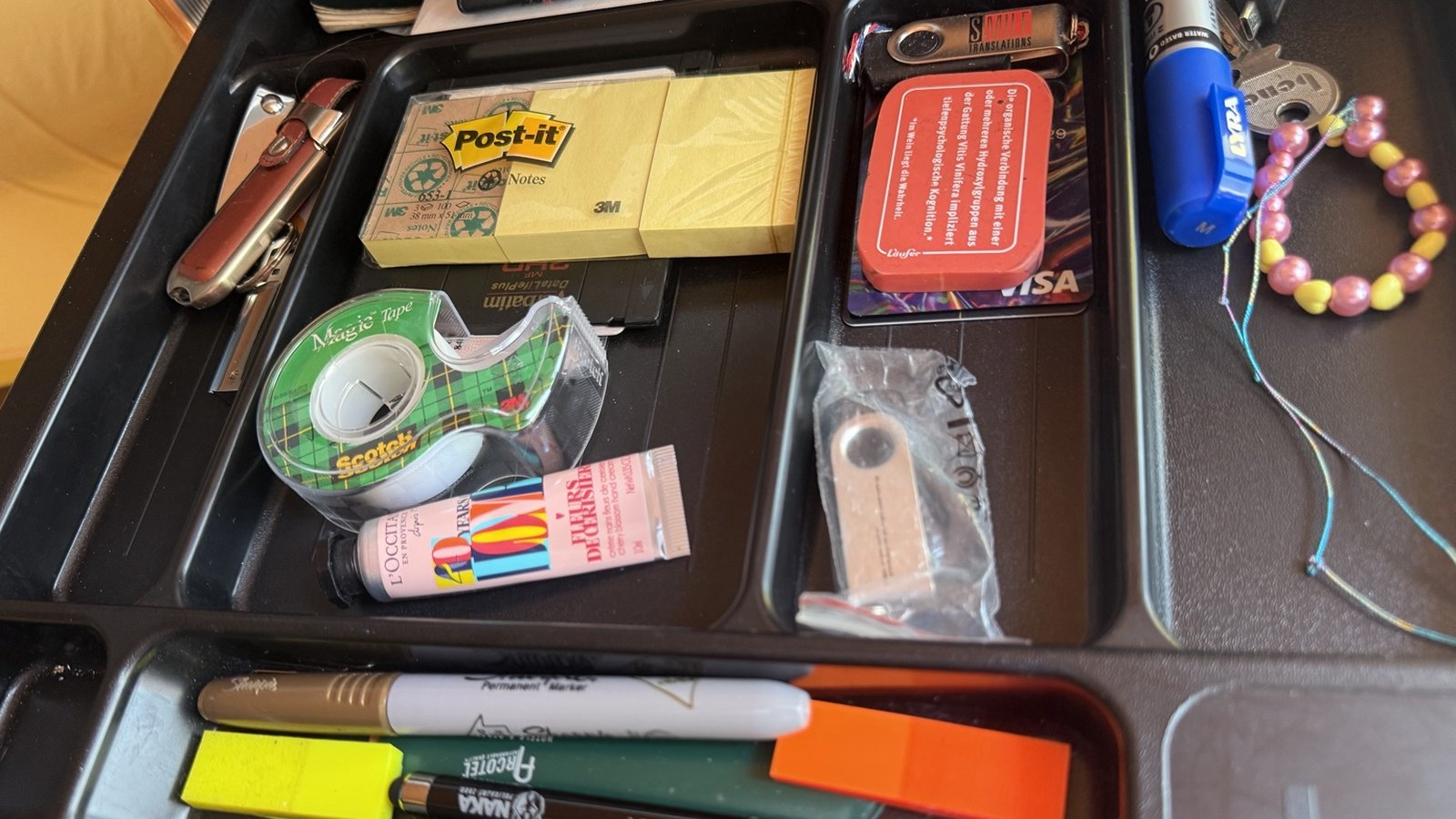
There are few sentences that drive me more insane than:
"We've always done it this way."
I hated it when I was working in Belgium years ago.
I still hate it.
And it really doesn't matter whether we are talking about something huge or completely banal.
Back then, I heard it about everything from raw-material price increase negotiations to the office-supply closet.
Yes, the office-supply closet.
It was a mess.
There were never any Post-its when you needed them. Things weren't where they should be. And apparently there were reasons for why all of this was the way it was.
Mostly involving some version of:
We've always done it this way.
So I fixed the closet.
At roughly the same time, I was working on the slightly less straightforward problem of raw-material price increases.
Because you can do both.
Not everything needs a transformation project
The supply closet was not strategically important.
Nobody needed a steering committee.
I don't remember there being a business case.
And I am reasonably certain it never appeared on a KPI dashboard.
It was just annoying.
Every day.
And, more importantly, it was easy to make less annoying.
So why wouldn't you?
We have a strange tendency in organizations to accept hundreds of tiny frustrations because individually none of them is important enough to fix.
The missing Post-its.
The approval requiring three unnecessary steps.
The spreadsheet everybody hates.
The meeting nobody quite knows why they are attending.
The process that made sense in 2008 and has somehow achieved protected-species status.
None of these will bring the company down.
But put enough of them together and they consume an incredible amount of energy.
Not necessarily working hours you can neatly calculate in Excel.
Brain power. Patience. Willingness to deal with the next difficult thing.
And those are fairly useful resources when you're trying to change something big.
I don't believe in fixing everything either
This is where transformations can go badly wrong in the other direction.
Suddenly everything is touchable.
Great!
Let's fix the systems.
And the organization.
And the customer journey.
And the reporting.
And that process nobody has liked since 2008.
And while we're here, apparently somebody has strong feelings about the travel-expense form.
No.
A transformation is not your opportunity to finally address everything that has annoyed somebody for the last two decades.
But it is a rare opportunity to question things that previously seemed untouchable.
So use it.
My test is fairly simple:
Will a customer, partner or colleague actually notice?
And:
If we fix this now, does it make something harder easier afterwards?
If yes, I'm interested.
Sometimes you need an early, visible win
And I don't mean the kind of "quick win" that gets a green tick on a transformation slide.
I mean something people can actually see.
Yesterday the stupid thing didn't work.
Today it does.
Done.
The closet was one of those things.
Did anybody walk into work the next morning and think:
Wow. What an extraordinary transformation.
Obviously not.
But the Post-its were there.
A small everyday frustration was gone.
And perhaps more importantly, something everybody had simply accepted as "the way it is" suddenly wasn't.
Turns out we hadn't always done it that way after all.
We could change it.
That matters.
Because the big stuff takes longer.
Meanwhile, there was the small matter of raw-material prices
That negotiation obviously wasn't solved by reorganizing stationery.
I feel I should make that clear before somebody develops a new management methodology involving cupboards.
It took work. It took negotiation. And it mattered commercially.
We eventually landed a historic agreement and received a cost-effectiveness award from Toyota Motor Europe in the process.
Was that because I made sure people could find the Post-its?
Absolutely not.
Do I think the two things are completely unrelated?
Actually, no.
Because changing something small and visible does something.
It removes an irritation.
It shows that things can move.
And it frees up a little bit of energy for the thing that actually is difficult.
Maybe that closet was one tiny spark.
Not because the closet mattered.
Because changing it did.
So fix the closet
When you're in the middle of a transformation, do the big things.
Tackle the negotiation.
Change the system.
Rethink the organization.
Do the uncomfortable stuff that actually moves the business.
But don't become so obsessed with the transformation plan that you walk past something stupid every morning because it isn't strategically important enough.
If you're touching something anyway, ask whether you can make it better.
If there's an everyday frustration you can remove without creating three new ones, remove it.
And whenever somebody tells you:
"We've always done it this way."
Ask why.
There might be an excellent reason.
There often isn't.
Sometimes people need to see that change is possible before the big change is finished.
And sometimes transformation really does start with the Post-its.